
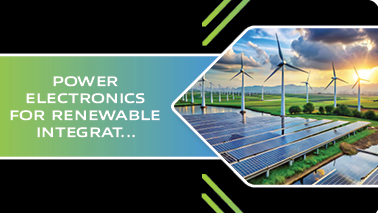
Power Electronics serves as the critical "nervous system" of renewable energy integration, moving beyond simple electricity conversion to sophisticated grid orchestration. Power electronics refers to the use of solid-state electronics such as inverters, converters, and rectifiers to control and convert electric power from the variable forms produced by solar and wind into the stable, regulated AC power required by the grid. As of early 2026, the global market for power electronics in renewable energy is valued at approximately $10.25 billion, growing as industries shift toward high-efficiency, high-power modules to handle the massive influx of clean energy.
The current technological landscape is dominated by the transition from traditional silicon-based components to Wide-Bandgap (WBG) Semiconductors, specifically Silicon Carbide (SiC) and Gallium Nitride (GaN). These materials allow devices to operate at higher voltages, temperatures, and switching frequencies than silicon. In 2026, SiC is being used in utility-scale solar inverters to reduce power losses by over 50%, while GaN is revolutionizing compact on-board chargers for EVs. Furthermore, the rise of Grid-Forming (GFM) Inverters is a major 2026 trend; unlike older "grid-following" models, GFM inverters can establish their own voltage and frequency references, providing the "synthetic inertia" necessary to keep the grid stable as traditional spinning turbines from coal plants are decommissioned.
The importance of power electronics lies in its role as the ultimate "grid balancer." By using AI-integrated control algorithms, modern converters can respond to grid fluctuations in milliseconds, preventing blackouts and optimizing energy flow between batteries, EVs, and the main grid. This is essential for achieving high penetration of renewables, as power electronics ensure that "dirty" or fluctuating energy from weather-dependent sources is cleaned and synchronized perfectly with existing infrastructure. Without these advancements, the 2026 goal of integrating record-breaking solar and wind capacities such as India’s 217 GW of non-fossil capacity would be technically impossible due to grid instability.
Share this page on your timeline
ALSO READ Renewable Clean Energy Systems Solar Photovoltaic Technologies Floating Solar Systems Wind Energy and Wind Technologies Hybrid Renewable Energy Systems Bioenergy and Biomass Waste-to-Energy Technologies Geothermal Energy Systems Marine and Tidal Energy Smart Grids Power Systems Microgrids and Distributed Energy Resources Power Electronics for Renewable Integration Grid Stability and Reliability Cybersecurity in Power Systems AI and Machine Learning in Power Systems Digitalization of Energy Systems IoT Applications in Energy Advanced Battery Technologies Grid-Scale Energy Storage Long-Duration Energy Storage Thermal Energy Storage Systems Hydrogen Production and Storage Fuel Cell Technologies Sustainable Power Energy Efficiency Energy-Efficient Buildings Smart Cities and Energy Systems Energy Management Systems Industrial Energy Optimization Energy Transition, Policy Future Systems Decarbonization Pathways Net-Zero Energy Systems Carbon Capture, Utilization and Storage Circular Economy Energy Policy and Regulation Climate-Resilient Energy Systems Electric Mobility and Charging Infrastructure Vehicle-to-Grid Technologies Future Power System Technologies Hydro Power
Tags
Biofuels Conferences
Green Hydrogen Conferences Europe
Solar Energy Conferences 2026
Bioenergy Conferences
Electric Vehicles Conferences
Renewable Clean Energy Conferences Middle East
Green Hydrogen Technology Conferences
Hydro Power Conferences Middle East
Renewable Energy Conferences USA
Power Electronics Conferences Europe
Circular Economy Conferences Japan
Smart Energy Meetings 2026
Renewable Energy Conferences Europe
Smart Grid Systems Conferences
Smart Grids Conferences Asia